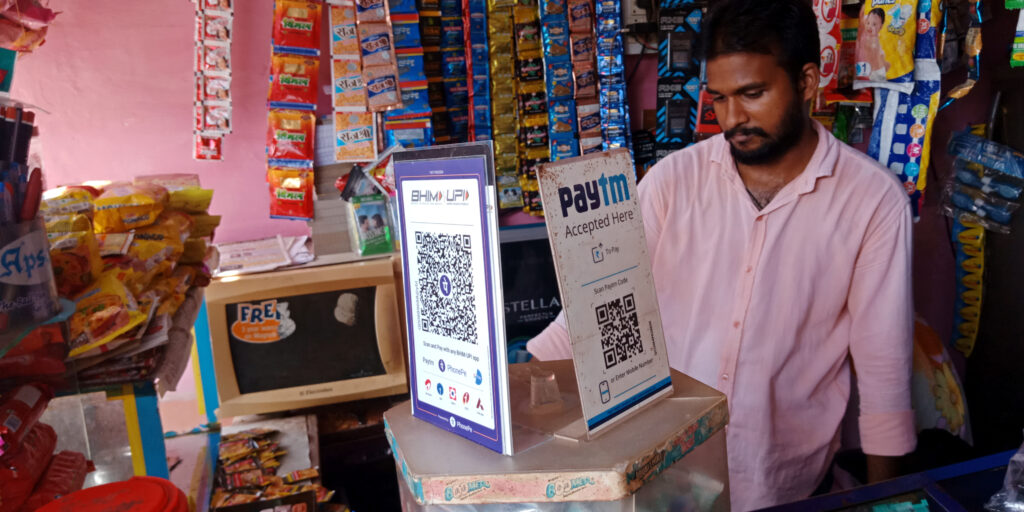
Open Transaction Networks (OTNs) are a new form of digital market infrastructure that allow multiple independent providers and competing applications to transact through shared, protocol-based rules rather than a single centralised platform. Built on core layers of Digital Public Infrastructure (DPI), such as digital identity, digital payments, and consent-based data sharing, OTNs enable participant verification, payment authorisation, and information exchange. Together, these systems can reduce verification, contracting, and settlement costs while supporting interoperable market participation.
By lowering barriers to entry for small businesses and reducing reliance on dominant intermediaries, OTNs may enable more open and contestable markets. At the same time, they raise questions around governance, incentives, consumer protection, and whether market power shifts across layers. As OTNs remain at an early stage globally, robust empirical evidence on their long-run effects is still limited.
Early deployments using the Beckn Protocol, including India’s Open Network for Digital Commerce and Namma Yatri, indicate that OTNs can increase competition by unbundling the supply chain. However, it remains unclear how durable these effects are, how they vary across sectors, and what risks emerge as networks scale.
With support from the Gates Foundation, GDN’s programme seeks to build the economic foundations needed to evaluate OTNs across sectors, including health, agriculture, mobility, commerce, and energy, focusing on what works, for whom, under which design choices, and at what cost.