

2026 - 2028 (in four phases)

Asia, Africa, and Latin America

Gates Foundation
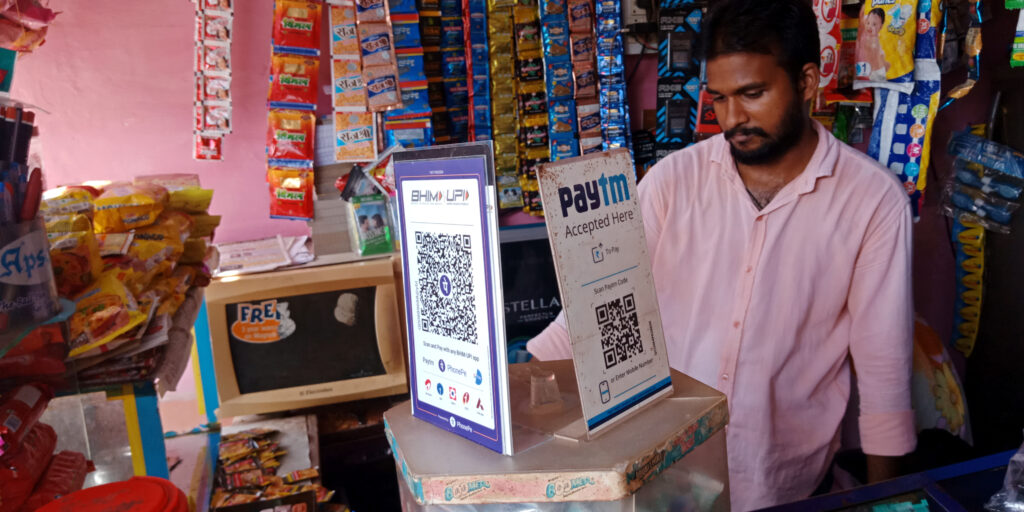
Open Transaction Networks (OTNs) are a new form of digital market infrastructure that allow multiple independent providers and competing applications to transact through shared, protocol-based rules rather than a single centralised platform. Built on core layers of Digital Public Infrastructure (DPI), such as digital identity, digital payments, and consent-based data sharing, OTNs enable participant verification, payment authorisation, and information exchange. Together, these systems can reduce verification, contracting, and settlement costs while supporting interoperable market participation.
By lowering barriers to entry for small businesses and reducing reliance on dominant intermediaries, OTNs may enable more open and contestable markets. At the same time, they raise questions around governance, incentives, consumer protection, and whether market power shifts across layers. As OTNs are still at an early stage globally, robust empirical evidence on their long-run effects remains limited.
Early deployments using the Beckn Protocol, including India’s Open Network for Digital Commerce and Namma Yatri, indicate that OTNs can increase competition by unbundling the supply chain. However, it remains unclear how durable these effects are, how they vary across sectors, and what risks emerge as networks scale.
With support from the Gates Foundation, GDN’s programme seeks to build the economic foundations needed to evaluate OTNs across sectors, including health, agriculture, mobility, commerce, and energy, focusing on what works, for whom, under which design choices, and at what cost.
As part of the programme, GDN will lead and manage three workstreams:
These three workstreams support the programme’s two aims: to build research capacity in the Global South on emerging innovations such as OTNs, and to inform decisions on whether, when, and how to adopt, design, and scale interoperable market systems that improve lives and livelihoods.
The paper examines how OTNs enable competing digital platforms to interoperate through shared protocols, using a two-sided Hotelling model to study platforms’ incentives to adopt interoperability. It shows that full interoperability can emerge as an equilibrium outcome and explores its implications for platform competition, user welfare, rent distribution and the design of inclusive digital public infrastructure.
The programme is now entering its second phase, with local research teams being selected to conduct empirical research in India, Kenya, and Brazil. Selected teams will each receive grants of USD 50,000 and participate in a collaborative research programme with strategic and technical guidance from GDN's Global Scientific Advisory Committee, comprising senior economists and OTN experts. Applications must be submitted by 21 August 2026.

This ADBI-GDN session explored innovative pathways for designing digital payment ecosystems and implementing OTNs. Held on the sidelines of the Digital Transformation Indonesia Conference & Expo in Jakarta, it explored cases from India, the Republic of Korea, and beyond to better understand how this approach can navigate inclusive digital transformation in Indonesia. Access the presentation on the event page to learn more about the programme's theoretical and empirical work.
If you have questions, please contact the OTN team at OTN@gdn.int.
You can also subscribe to the GDN newsletter to receive the latest programme updates and announcements.